


It’s been a long time in the making, but yesterday I made the trip down to the Royal Docks to witness the launch of Tipping Point East (TPE). As someone who spends far too much time thinking and talking about circularity and the logistical headaches of material reuse, seeing this 20,000 sqm site actually open its gates felt like a genuine milestone for London.
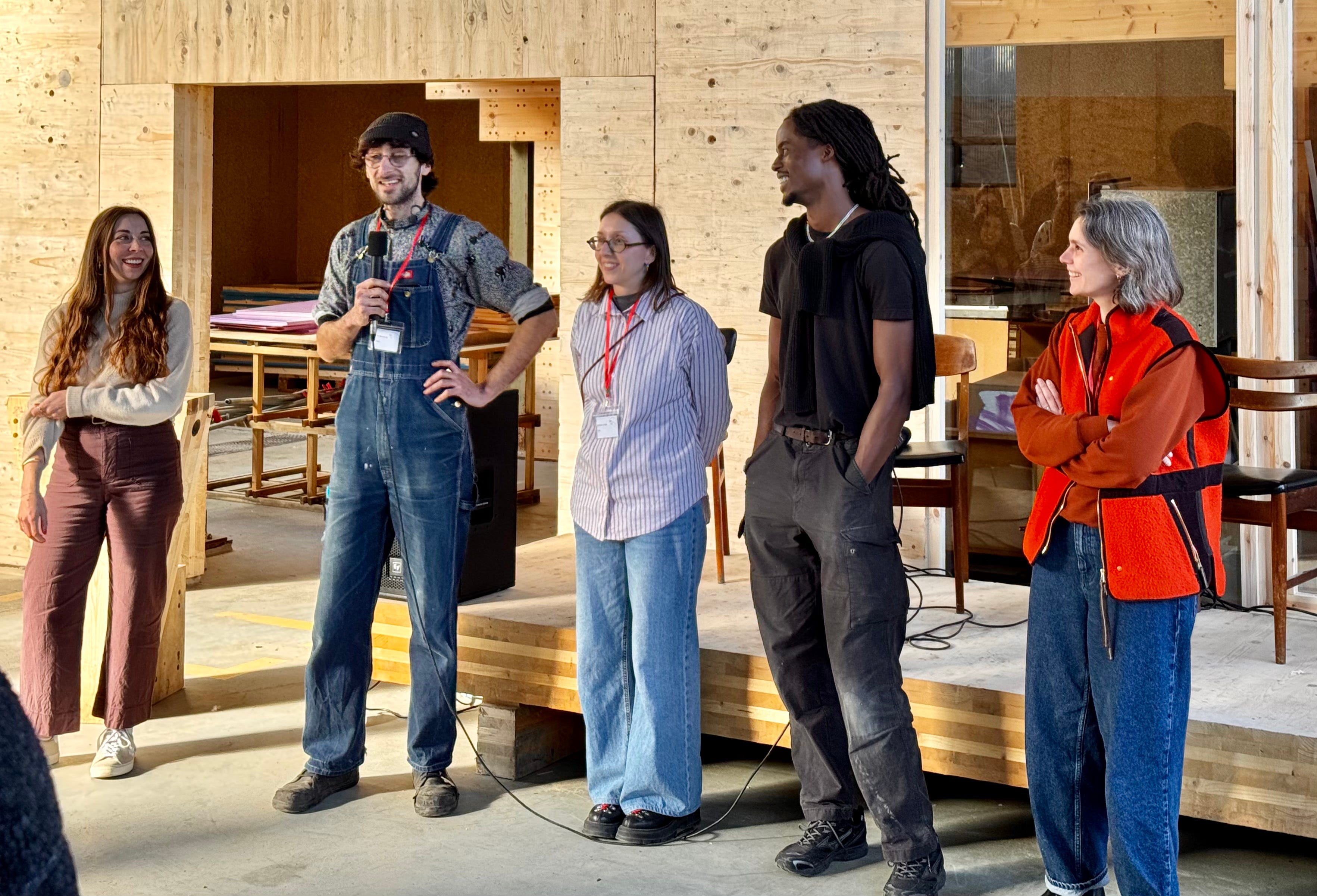
The energy at the launch was very clear and everyone had a spring in their step (and no it wasn’t just down to the beautiful sunshine!). After a formal morning session opened by Deputy Mayor Mete Coban, I joined the afternoon walkthrough hosted by pioneer of TPE, Talia Berriman (Newham Council), to see how the theory of “circular construction” is being put into practice.
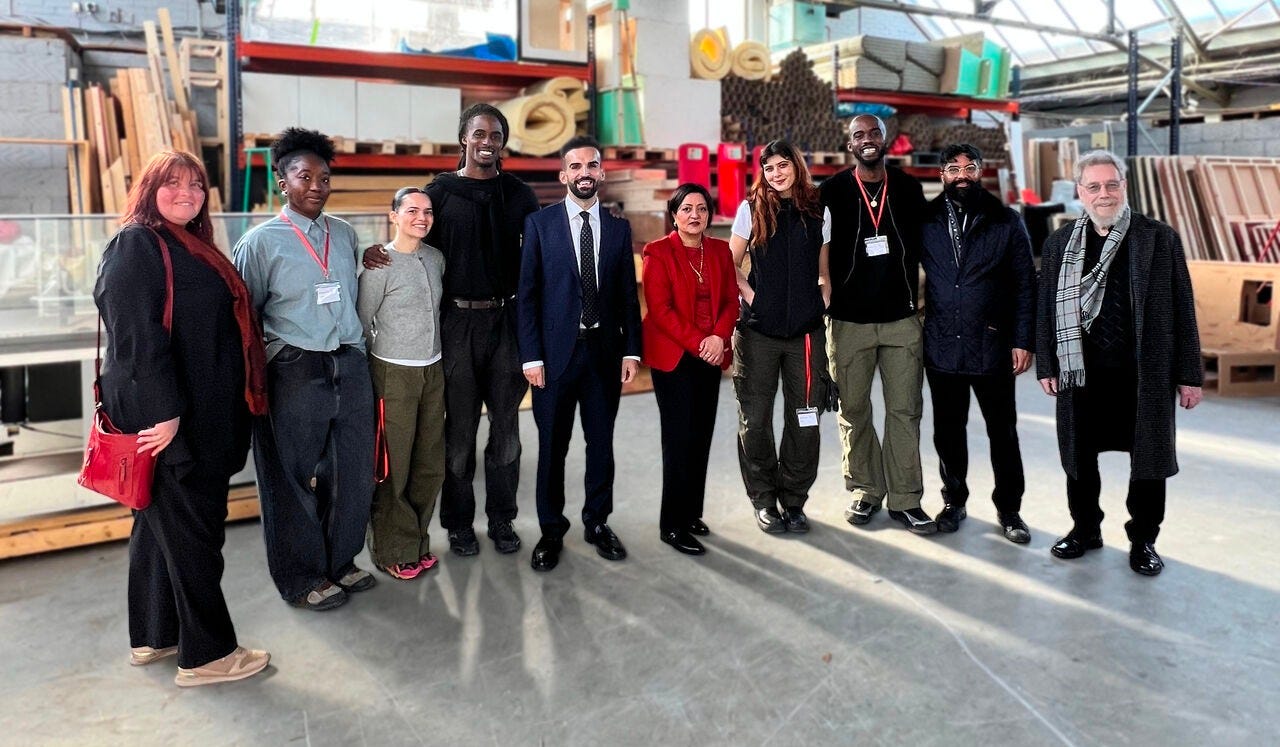
The tour was split into three distinct chapters that define the TPE ecosystem:
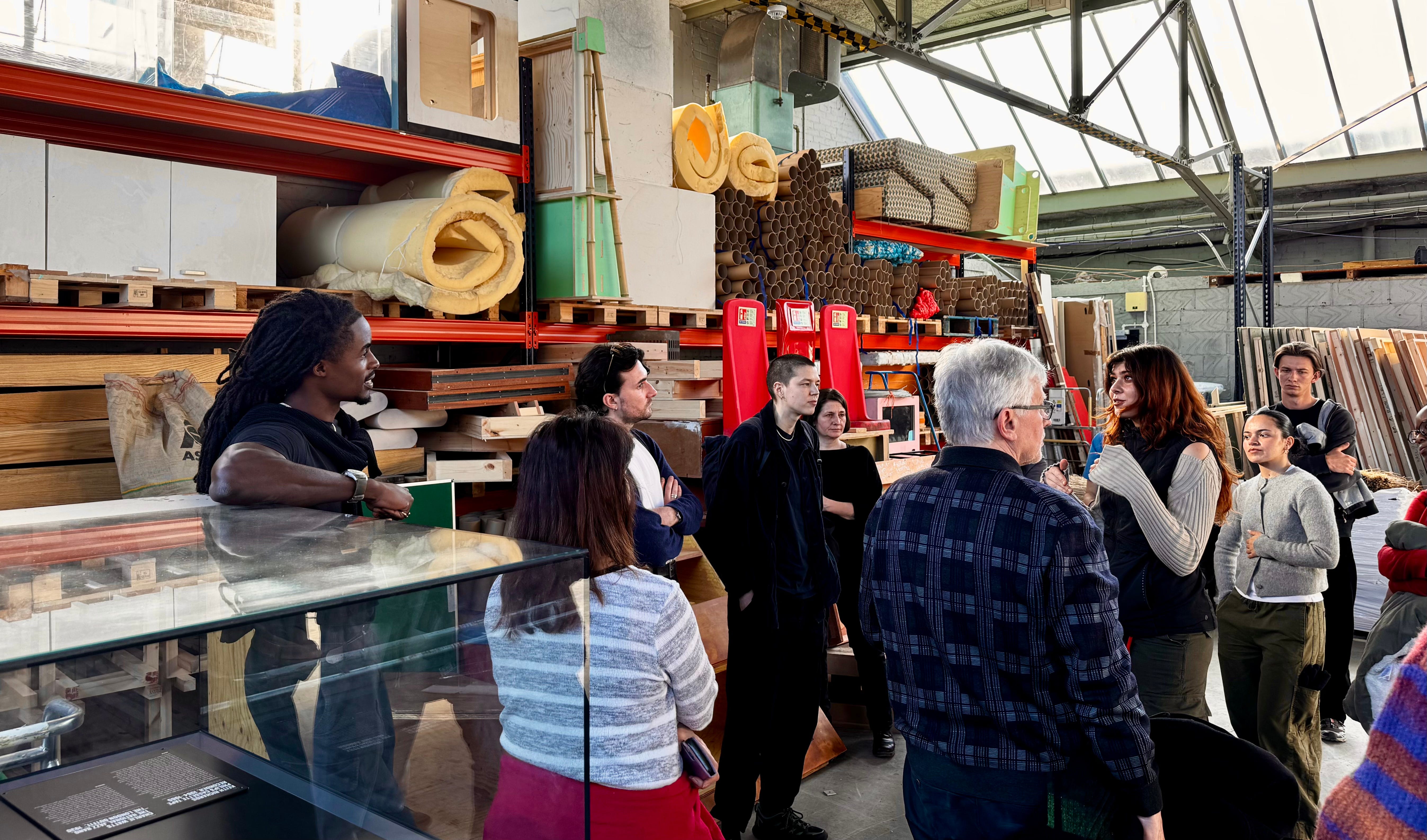
The Material Warehouse: Akil Scafe-Smith from RESOLVE Collective walked us through the intake and inventory, telling us some stories of specific materials that have come from cultural uses.
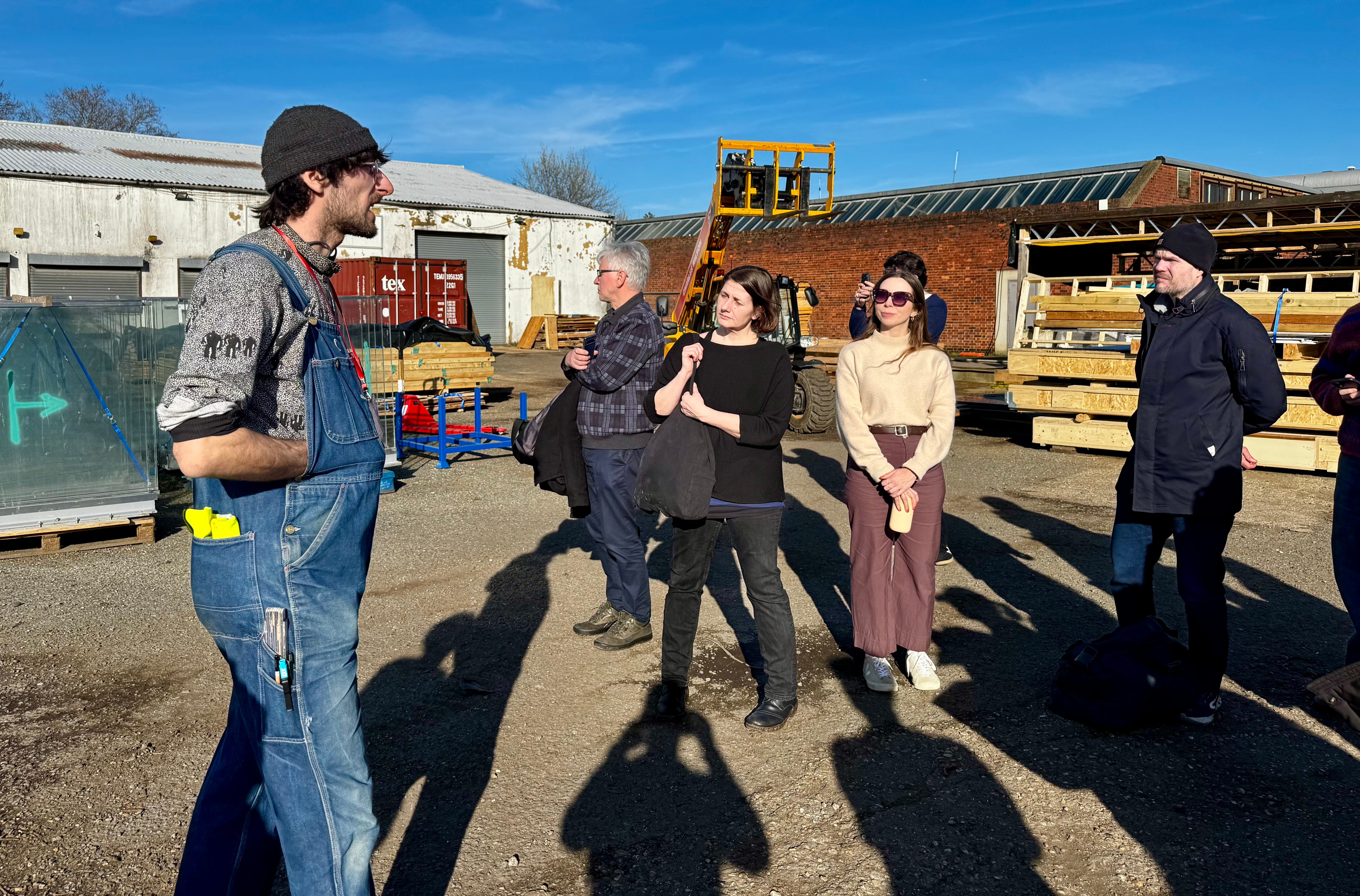
The Yard and Factory: Joel De Mowbray from Yes Make showed off the Yard Space and explained that coming soon would be the engine room where the “doing” happens, a second warehouse space that is going to be the Factory.
The Office Space: Summer Islam from Material Cultures explained the design and creative thinking behind TPE’s use of available materials (think reused CLT, pressed hemp boards and Elton John’s old kitchen) to create the much needed admin backbone of the operation, comprising office space and a meeting room.
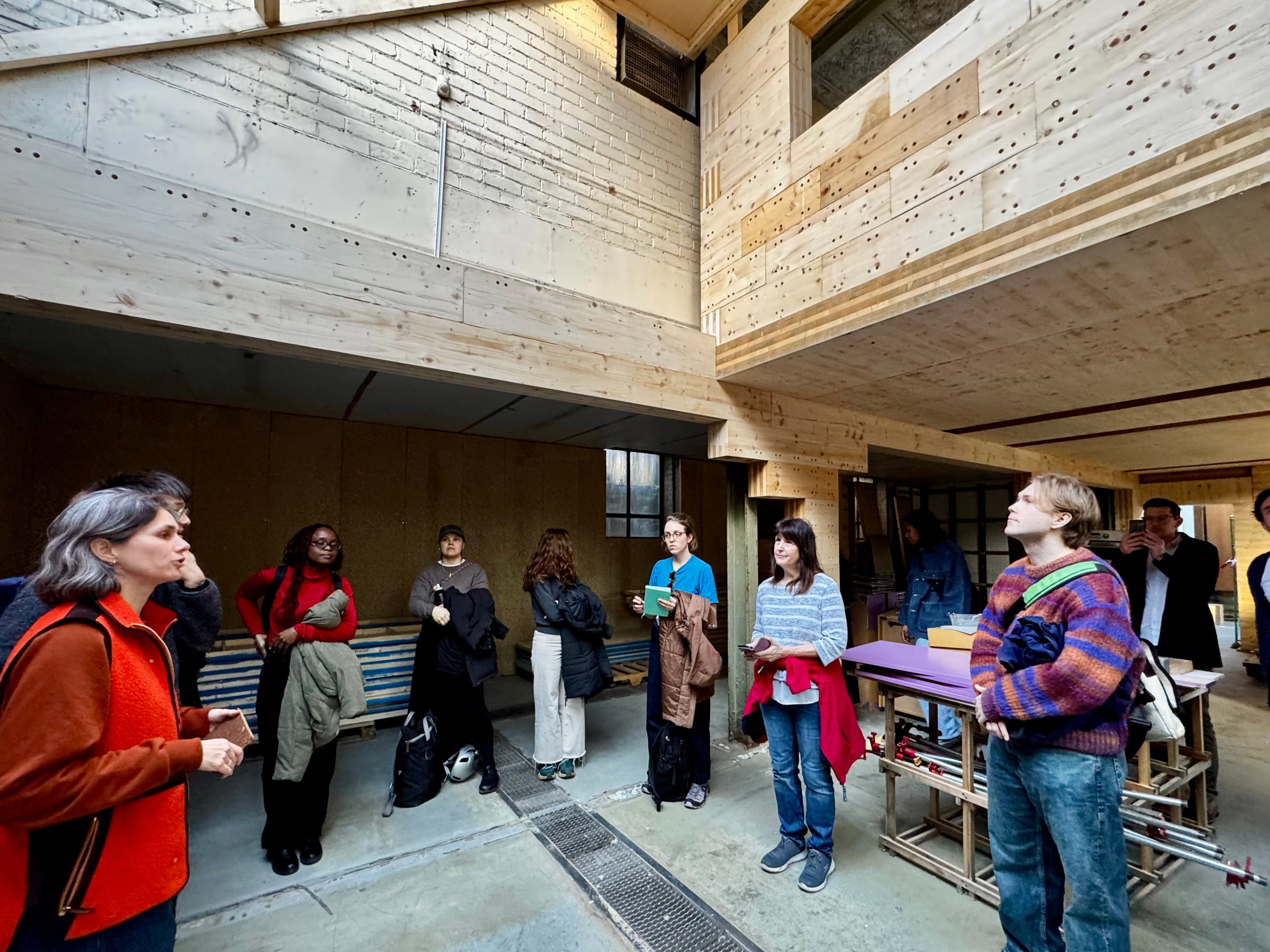
What TPE has achieved here is immense. It isn’t just a warehouse; it’s a co-developed hub that creates practical, everyday entry points into climate action. By housing these three practices under one roof, they’ve built a system that stops high-quality materials from hitting the skip and immediately redirects them into projects that serve local needs. And with it being a 5-year meanwhile play on a site which ultimately is going to be developed out into Silverworks as part of the wider Silvertown masterplan, there is enough time to establish TPE and hopefully it will leave some sort of legacy within the permanent re-development.
It is brilliant to see a space that doesn’t just hoard “waste” but actively adds value to it. The imagination on display from the designers and craftspeople involved means that almost anything salvaged can be reimagined. And on top of that, they are building some of the systems needed to enable this kind of movement to grow and for that, the whole team deserves a massive well done.
However, as we move from the excitement of the launch into the reality of the long-term, there are some interesting questions that I hope TPE will help us answer.
Firstly, there is the scale. While TPE is a triumph for community-led projects, I’m keen to see how this model translates to the heavy-duty requirements of larger-scale developments. Can we take these lessons and this site and scale them to a level that moves the needle for the designers, contractors and clients that are involved in medium to large commercial projects?
Then there’s the value proposition. Currently, materials are taken for free, with only collection costs covered. While this is an attractive “avoided cost” for those looking to dodge disposal fees, I do wonder if we are still inadvertently downplaying the inherent value of the material itself. To reach true commercial viability, surely we eventually need the market to price these assets properly.
Finally, there’s the “inventory” challenge. When asked what they say no to, the answer was “very little.” That’s a noble starting point, but for a hub to remain efficient, you need a high churn rate. I’ll be watching closely to see how they draw the line between a vibrant resource centre and a stagnating storage zone.
I want to be clear, these aren’t criticisms, they are just a couple of considerations in the next set of hurdles for the entire circular economy. TPE is a bold, energetic step in the right direction and I’m very excited to see how they refine the model. If you’re in the industry and want to see what the future of urban resource management looks like, get yourself down to the docks.